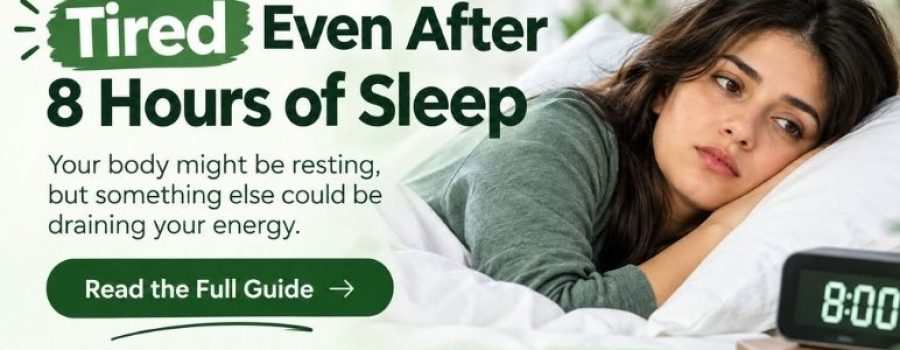
You did everything right. You were in bed by 10:30, the phone was face-down, and the alarm didn’t go off until 6:30. Eight hours, on paper. Yet here you are, dragging yourself to the coffee maker, feeling like you slept in a parked car.
If that sounds familiar, you’re far from alone. Persistent tiredness is one of the most common reasons people visit a doctor, and “but I’m sleeping enough” is one of the most common things they say when they get there.
Eight hours in bed and eight hours of restorative sleep are two very different things. Let’s look at why you might still be exhausted, and what you can do about it.
Time in Bed Is Not the Same as Sleep
Most of us track sleep by the clock: what time we lay down and what time we got up. But your body doesn’t measure rest that way. What matters is how much of that time you spent in real, uninterrupted sleep, and how well you moved through its stages.
A healthy night cycles through light sleep, deep sleep, and REM sleep several times. Deep sleep is when your body does much of its physical repair. REM is when your brain sorts through memories and emotions. If something keeps interrupting those cycles, you can log a full eight hours and still wake up short-changed.
The tricky part is that many interruptions are invisible to you. You might wake for a few seconds dozens of times a night and never remember it. In the morning all you know is that you feel awful.
Hidden Sleep Disruptors
Sleep apnea. This is one of the most underdiagnosed causes of daytime exhaustion. In obstructive sleep apnea, your airway partially or fully closes during sleep, briefly cutting off your breathing. Your brain jolts you toward waking to restart it, sometimes hundreds of times a night. Loud snoring, gasping, morning headaches, a dry mouth, and falling asleep at your desk are classic signs. Many people with sleep apnea don’t fit the stereotype, either. It affects people of all sizes and ages. If a partner has ever told you that you stop breathing at night, take it seriously and talk to your doctor.
Alcohol. A glass of wine or a beer might help you fall asleep faster, but it tends to fragment sleep later in the night and cut into REM. You may conk out quickly and wake at 3 a.m. with a racing mind, or wake at your usual time feeling unrefreshed. Even moderate drinking close to bedtime can do this.
Late caffeine. Caffeine has a half-life of roughly five to six hours, which means that afternoon latte is still partly active in your system at bedtime. You may fall asleep fine and still get lighter, less restorative sleep. Some people are especially sensitive, and it’s worth experimenting with a noon cutoff for a couple of weeks.
Your bedroom. Light, noise, and temperature all affect sleep quality even when they don’t fully wake you. A room that’s too warm is a common culprit. Most people sleep best in a cool, dark, quiet space, somewhere around 65 to 68°F (18 to 20°C).
Restless legs and other movement issues. If you get creepy-crawly sensations in your legs at night, or your partner reports you kick in your sleep, that can shred sleep quality without you realizing it.
Your Body Clock May Be Out of Sync
Inside your brain sits a master clock that runs on a roughly 24-hour cycle. It controls when you feel alert, when you feel sleepy, and when hormones like melatonin and cortisol rise and fall. This is your circadian rhythm, and it’s shaped mostly by light.
When your light exposure is scrambled, your clock gets confused. Think of a day spent in a dim office, followed by an evening under bright screens and overhead lights. Your brain never gets a strong “it’s daytime” signal in the morning, and it gets a confusing “it’s still daytime” signal at night. The result is sleep that comes late, feels shallow, and leaves you groggy.
Irregular schedules make it worse. Sleeping until 10 on weekends and 6 on weekdays creates what researchers call social jet lag. You’re effectively flying across time zones every Friday night and flying back on Monday morning. No wonder Mondays feel brutal.
A simple fix helps more than most people expect: get outside within an hour of waking. Even on a cloudy day, outdoor light is far brighter than indoor light and helps anchor your clock. Try to keep your wake time within an hour of consistent, even on weekends.
What You Eat (and When) Shapes How You Feel
Fatigue often starts at the kitchen table, not the pillow.
Blood sugar swings. A breakfast of pastry and sweetened coffee, or a big pasta lunch with no protein, can send your blood sugar up quickly and then crashing down. That crash feels like a wave of tiredness, brain fog, and cravings, usually mid-morning or mid-afternoon. If you notice a predictable slump a couple of hours after eating, this may be why. Pairing carbohydrates with protein, fiber, and healthy fats tends to smooth things out.
Skipping meals or under-eating. Your body needs fuel to make energy. Chronic under-eating, or going long stretches without food, can leave you feeling flat and irritable.
Dehydration. Even mild dehydration can make you feel sluggish and foggy and can give you a headache. Many of us start the day slightly behind on fluids, then reach for caffeine instead of water.
Heavy late-night meals. Eating a large meal right before bed makes your digestive system work while you’re trying to rest, which can cause discomfort, reflux, and lighter sleep.
Nutrient Gaps That Quietly Drain Your Energy
Your cells turn food into energy using a long list of vitamins and minerals. When you’re low on some of the key players, fatigue is often one of the first signs. A few of the most common ones:
Iron. Iron helps carry oxygen through your blood. Low iron, especially common in women who menstruate, vegetarians, and endurance athletes, can cause deep fatigue, breathlessness on stairs, pale skin, and cold hands and feet. You can be low in iron without being technically anemic.
Vitamin B12 and other B vitamins. B vitamins play a big role in energy metabolism and nerve function. B12 is found mainly in animal foods, so people on plant-based diets, older adults, and those taking certain medications are more likely to run low.
Vitamin D. Often called the sunshine vitamin, it’s made in your skin with sun exposure. Low levels are very common, especially in winter or if you work indoors, and have been linked with tiredness and low mood.
Magnesium. This mineral is involved in hundreds of processes in the body, including muscle relaxation and energy production. Many people don’t get enough from their diets, and stress can increase the body’s demand for it.
Here’s the important part: don’t guess. Fatigue overlaps with a huge number of conditions, and taking supplements blindly can mean spending money on the wrong thing, or in the case of iron, taking too much. A simple blood test can tell you where you actually stand.
Stress Keeps Your Body in “On” Mode
You can lie perfectly still in bed while your nervous system is running a marathon.
When you’re under chronic stress, your body keeps releasing cortisol and adrenaline, hormones designed for short bursts of danger, not months of deadlines and worry. Elevated stress hormones at night make it harder to reach deep sleep, and you may wake in the small hours with your mind already racing. Then the next day you’re tired but wired: exhausted, yet somehow unable to relax.
Mental load counts too. Constant decision-making, notifications, emotional labor, and caregiving all use up energy, even when you’re sitting down. Some days you feel drained without having done anything physically demanding, and that’s real.
Depression and anxiety are also strongly tied to fatigue and to unrefreshing sleep. If your tiredness comes with low mood, loss of interest, or constant worry, that’s worth mentioning to a healthcare professional. It’s a common, treatable health issue, not a personal failing.
Medical Causes Worth Ruling Out
Sometimes the answer isn’t lifestyle at all. Persistent tiredness can be linked to:
- Thyroid problems, especially an underactive thyroid, which slows metabolism
- Anemia, from iron, B12, or folate deficiency or other causes
- Blood sugar issues, including prediabetes and diabetes
- Hormonal changes, such as perimenopause, menopause, or low testosterone
- Certain medications, including some antihistamines, blood pressure medications, and antidepressants
- Long-term conditions, like autoimmune disorders, chronic infections, or post-viral fatigue
If you’ve been exhausted for more than a few weeks despite decent sleep and reasonable habits, please don’t just push through. Book an appointment, describe your symptoms honestly, and ask about basic bloodwork. It’s much better to rule these things out than to keep blaming yourself.
Movement: The Counterintuitive Energy Source
When you’re tired, the last thing you want to do is exercise. But a sedentary day often makes fatigue worse. Regular physical activity improves sleep quality, boosts mood, and helps your body produce energy more efficiently.
You don’t need an intense gym routine. A 20-minute brisk walk, a few stretching sessions through the day, or a short bike ride can make a noticeable difference. Morning or daytime movement in particular helps reinforce your body clock. Just avoid very intense workouts right before bed if you find they leave you wired.
A Practical Reset You Can Start This Week
You don’t have to overhaul your life overnight. Small, steady changes do more than dramatic ones you can’t sustain. Here’s a simple place to begin:
- Anchor your mornings. Wake at a consistent time and get outside light within the first hour.
- Set a caffeine curfew. Try stopping by noon or early afternoon for two weeks and see how you feel.
- Build a wind-down routine. Dim the lights, put screens away 30 to 60 minutes before bed, and do something calming, like reading, stretching, or a warm shower.
- Balance your plate. Include protein and fiber at every meal, and drink water throughout the day.
- Move a little every day. Even a short walk counts.
- Cool and darken your bedroom. Think cave-like.
- Track how you feel. Keep a simple note of your sleep, energy, meals, and mood for two weeks. Patterns often jump out.
- Get checked. If nothing improves, ask your doctor about a full workup.
Where Nutritional Support Fits In
A good foundation of sleep, food, movement, and stress management comes first. Supplements can’t replace those, and they shouldn’t be treated as a magic fix for exhaustion.
But for many people, targeted nutritional support can be a useful piece of the puzzle, particularly when a diet is missing certain nutrients or when demands on the body are high. At Biogrip Naturals, we believe in a food-first, informed approach: know what your body needs, choose quality ingredients, and give your daily routine a bit of extra backing where it makes sense. Talk to your healthcare provider before starting any new supplement, especially if you’re pregnant, nursing, taking medication, or managing a health condition.
The Bottom Line
Feeling tired after eight hours of sleep doesn’t mean you’re lazy, weak, or doing life wrong. It usually means something is getting in the way of truly restorative rest or of your body’s ability to make and use energy. It could be a hidden sleep disruptor, a scrambled body clock, a blood sugar rollercoaster, a nutrient gap, chronic stress, or an underlying health issue. Often it’s a combination.
The good news is that most of these are identifiable and improvable. Start with the simple habits, pay attention to your body’s signals, and don’t hesitate to get professional answers if the fatigue lingers. You deserve to wake up feeling like the day is something you can meet, not something you have to survive.
This article is for informational purposes only and is not intended to diagnose, treat, cure, or prevent any disease. Always consult a qualified healthcare professional about persistent fatigue or before starting any supplement. These statements have not been evaluated by the FDA.